
Last updated on October 26, 2026
How a bundles app helps lift your average order value on Shopify: bundle types, what to look for in an app, and proven strategies to sell more per order.
Summary: A bundles app lets you sell product bundles in your online store. According to industry data, bundling lifts average order value by 20% to 30% on average.
According to several industry analyses, up to 30% of ecommerce revenue now comes from products sold in bundles. That figure shows how much bundling has become a must-have growth lever. Yet many merchants still hesitate to get started because they don't fully understand how a bundles app works or what it really means for their business.
Whether you sell cosmetics, apparel or accessories, bundled offers make the buying decision easier for your customers while increasing the value of every transaction. One of the main reasons bundles work so well is that they solve the choice-overload problem: faced with too many options, shoppers are more likely to leave without buying. This guide shows you how to choose, set up and get the most out of a bundle app to turn every visit into a multi-item sale.
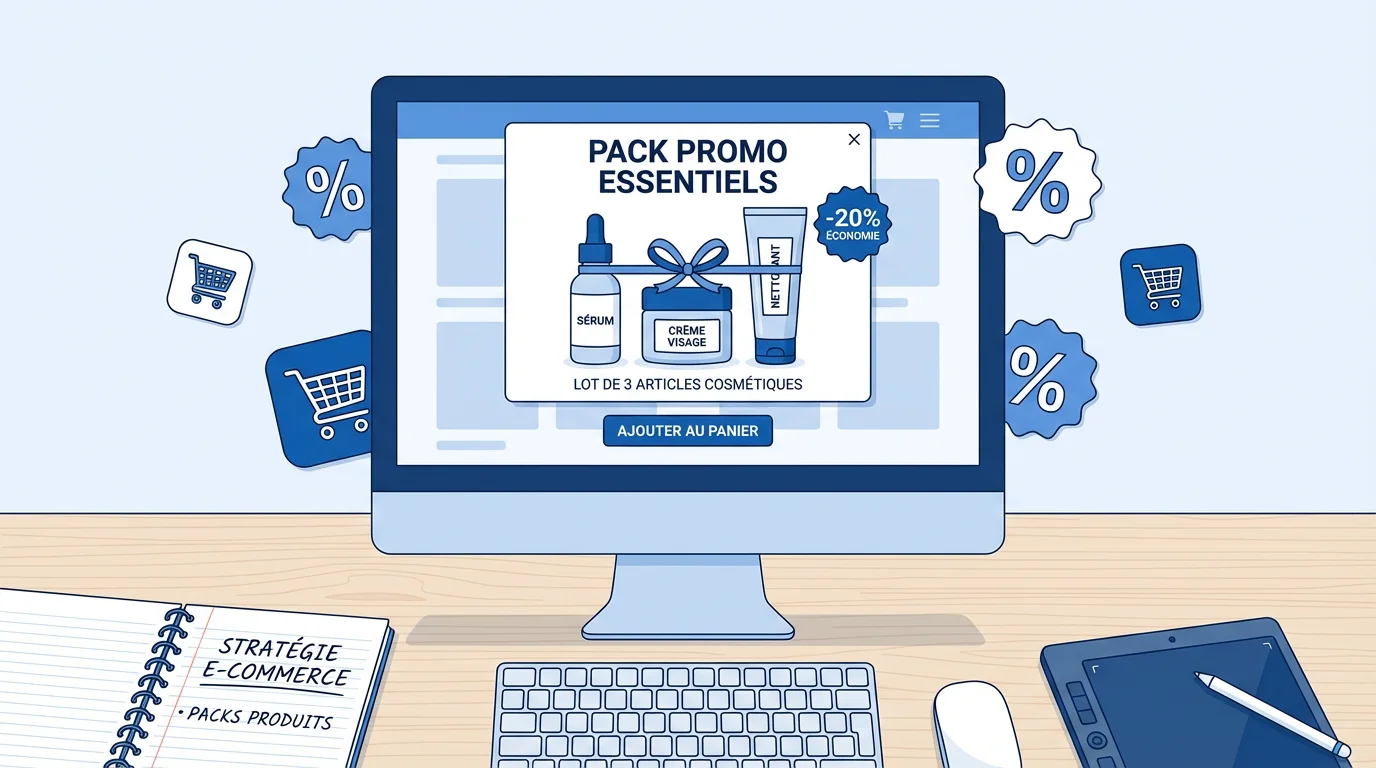
A bundle app is a tool that lets you group several products into a single bundle sold at one price (often discounted). It plugs directly into your ecommerce platform to handle display, pricing and inventory sync.
Unlike manually creating combined product pages, a bundles app automates inventory management. Shopify doesn't natively sync stock between a bundle and its individual components. Without a dedicated app, you risk selling a bundle when one of its products is out of stock.
The most common types of bundles are:
Fixed bundles: a predefined set of products sold together (e.g., a skincare starter kit).
Multipacks: several units of the same product (e.g., a 3-pack of t-shirts).
Mix and match: the customer builds their own bundle by choosing from a selection of products or variants.
BOGO offers (Buy One, Get One): buy one product, get the second one discounted or free.
Quantity breaks: tiered discounts based on the quantity purchased.
Each of these formats serves a specific goal, from clearing inventory to building loyalty to increasing average order value.
The data is clear. Most businesses see a 20% to 30% improvement in average order value from well-designed bundling strategies. That gain doesn't just come from the bundle's higher price; it comes from a stronger perception of value in the buyer's mind.
According to McKinsey research, strategic bundling increases sales by 20% while improving profits by 30%. That double benefit comes from lower marketing costs per unit and the operational efficiency of multi-item orders. Real-world results back up the trend: the brand Coconu saw a 20% increase in average order value after launching bundles, and the brand Maev recorded a 15% increase in AOV along with a 20% jump in units per transaction (source: Shopify Blog).
Beyond average order value, strategic bundling improves conversion rates by 15% to 25%, with the best implementations reaching 40%. Bundle upselling is also 68% more effective than efforts to acquire new customers.
Not all bundle apps are created equal. To make the right choice, focus on five core criteria.
This one is non-negotiable. Your app must automatically adjust the stock of each component whenever a bundle is sold. Without it, the risk of overselling and fulfillment headaches multiplies.
Go for a solution that handles fixed bundles, multipacks, mix and match, Buy X Get Y feature offers and quantity discounts (quantity breaks). The more versatile your tool, the more strategies you can test.
How your bundles look on the product page directly affects click-through rate. The app should let you adjust colors, copy and layout without coding.
Every third-party app adds weight to your store. More than 80% of Shopify merchants use third-party apps, and the average merchant installs at least six. Piling on apps slows down load times and hurts SEO. So favor lightweight solutions or, better yet, features built directly into your theme.
Measuring how your bundles perform is essential. A/B testing lets you compare the effectiveness of different approaches, such as various free shipping thresholds, loyalty program structures or product bundle combinations. Data-driven insights help you fine-tune your strategies (source: Salesforce).
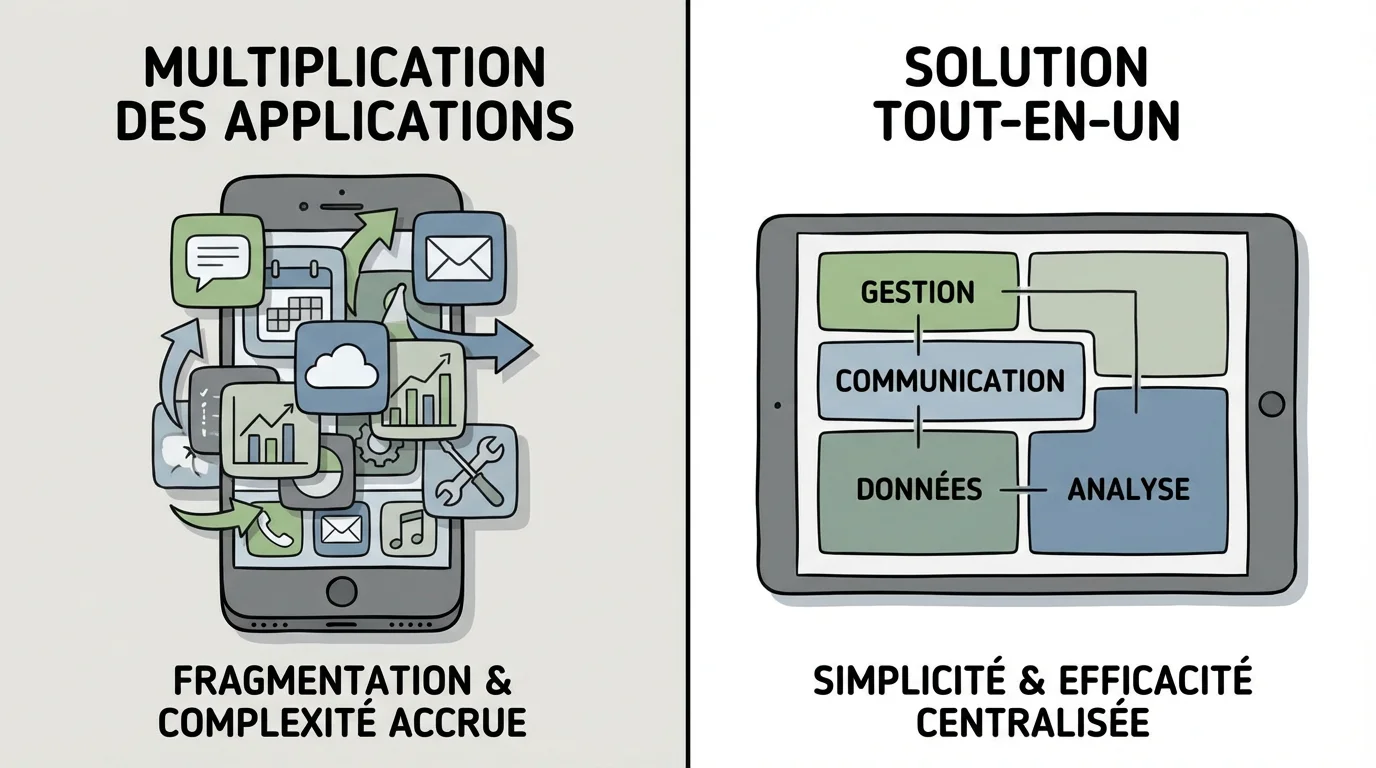
It's a fair question. Six apps at $30 each add up to $180 a month, or $2,160 a year, on top of your platform subscription. And that cost comes with extra technical complexity and the risk of conflicts between extensions.
Shopify offers a free native app (Shopify Bundles) that works on every plan. It handles fixed bundles and simple multipacks well. However, it doesn't cover advanced scenarios like complex mix and match or combined offers with upsells and cross-sells.
Third-party apps (Bundler, Fast Bundle, etc.) offer more features, but each one adds an external script that can slow down your store. The alternative is to use a theme with these sales mechanics built in. With our product bundles with variants, you get the flexibility of a bundle builder without installing another app.
To help you see things more clearly, here's a summary table of the available solutions. Pricing and features are based on the vendors' public information at the time of writing.
Solution |
Monthly price |
Bundle types |
Inventory sync |
Performance impact |
|---|---|---|---|---|
FullStack theme (native) |
Included in the theme |
Fixed, multipacks, quantity breaks, BOGO, cross-sells |
Yes (native Shopify) |
No external script |
Shopify Bundles (native) |
Free |
Fixed, multipacks |
Yes |
Light |
Bundles.app |
From $19 |
Fixed, multipacks, mix and match |
Yes |
External script |
Simple Bundles |
From $24 |
Fixed, mix and match, subscriptions, BOGO |
Yes |
External script |
Bundler |
Free plan available |
Fixed, mix and match, quantity breaks |
Partial |
External script |
The right choice depends on your specific needs. If performance and simplicity are your priorities, a solution built into your theme removes your dependence on third-party apps.
Offering both bundles and individual products generates 25% to 35% more revenue than a pure bundling strategy. Mixed bundling is the way to go. Here are four proven strategies.
Combining a best-seller with a slow-moving item drives product discovery while reducing dead stock. Pairing slow movers with popular items helps prevent dead inventory, and lesser-known products gain visibility when they're sold alongside best-sellers.
Tiered discounts ("buy 2, save 10%; buy 3, save 20%") tap into the "the more I buy, the more I save" mindset. 66% of shoppers rank BOGO offers as their favorite type of promotion, which confirms the powerful pull of offers perceived as "free."
According to Forrester, upselling and cross-selling drive roughly 10% to 30% of ecommerce revenue. To tap into this lever, our one-click cross-sells and one-click bump features let you suggest complementary products without cluttering the shopping experience.
Time-limited offers create a sense of urgency. A holiday gift box or a special back-to-school kit encourages immediate purchase. Test different combinations and measure the impact in your analytics to find the winning combos.
Creating bundles without measuring how well they work is like sailing without a compass. Here are the key metrics to watch:
Average order value (AOV): compare it before and after launching your bundles. Product bundles increase AOV by 20% to 30% on average.
Bundle conversion rate: what percentage of visitors who see a bundle add it to their cart?
Repeat purchase rate: do customers who buy bundles come back more often? Customers who buy bundles have a 2.7x higher customer lifetime value.
Inventory turnover: bundled products sell through 30% faster than individual items.
To take your analysis further, you can calculate your upsell and cross-sell rate to measure exactly how well your bundled offers perform.
In 2026, bundling is no longer just about what goes in the bundle. It's about when, how and why a bundle resonates with each customer. Immersive technology, AI-driven predictive logic and ethical transparency will be key to standing out.
Artificial intelligence is transforming how bundles are created. Algorithms analyze buying behavior to suggest relevant combinations. Businesses that roll out comprehensive AOV optimization strategies see increases of 15% to 30% thanks to AI personalization and strategic bundling.
Another strong trend: the convergence of bundles and subscriptions. Offering a recurring bundle (a monthly box of complementary products) combines a higher average order value with the predictability of recurring revenue. Ecommerce trends for 2026 show that online retailers are increasingly turning to AI, personalization and new solutions to improve conversion rates and performance on social channels (source: Digital Commerce 360).
Omnichannel selling also makes bundles more important. Your bundles need to be consistent across your online store, your physical retail location and your social channels. A high-performing bundles app has to adapt to this multichannel reality.
Bundling remains one of the most profitable levers for growing revenue without spending more on acquisition. A higher average order value, faster inventory turnover and stronger customer lifetime value: the benefits are concrete and measurable. Rather than stacking third-party apps, go for an integrated approach that keeps your store fast and simplifies your day-to-day management. Our all-in-one theme gives you 100+ native features, including bundles, cross-sells and quantity breaks, with no code and no extra apps. To take action, check out our Kaching Bundle guide for Shopify and start selling bundles today.
A fixed bundle is a set predefined by the merchant (e.g., shampoo + conditioner + hair mask). Mix and match lets the customer build their own bundle by choosing from a selection of products or variants. The second format often drives stronger engagement.
No. Discounts are common, but some bundles work without one by leaning on convenience or exclusivity (e.g., a discovery box with products you can't buy separately). What matters is clearly communicating the bundle's added value.
Every third-party app adds scripts that increase load time. To get around this, you can use bundling features built directly into your theme. With the FullStack theme, for example, bundle mechanics and the "This pack contains" section are native, with no impact on performance.
Rated 4.9/5 out of 200+ reviews






