Sorank, Semrush, Ahrefs, Yoast, Screaming Frog and 5 more: which SEO tool should you pair with a fast Shopify theme to win traffic that actually buys?

Thomas GiraudLinkedIn
Co-founder of FullStack, founder of the CRO agency The Deployer
Updated October 2026 by the FullStack theme team, makers of a Shopify theme built by a CRO agency.
| Tool | Best for | What it handles | AI tracking | Time required | Trial |
|---|---|---|---|---|---|
| Sorank | Shopify stores without a writer | Keywords, articles published to the Shopify blog, backlinks | ChatGPT, Claude, Gemini; Perplexity and Grok on Pro | Review before publishing | 3 days free |
| Semrush | Measuring demand in a category | Search, traffic, and ad data | AI visibility module | Several hours a week | Free trial |
| Ahrefs | Analyzing competing brands' links | Backlink index, audit | Brand Radar | Several hours a week | Free Webmaster version |
| Google Search Console | Every store | Indexing, queries, alerts | Not broken out | A few minutes | Free |
| Screaming Frog | Auditing the theme and sections | Full site crawl | No | One session per audit | 500 URLs free |
| SE Ranking | Merchants with several stores | Rankings, audits, reports | AI Overviews, AI Mode, ChatGPT | One to two hours a week | No card required |
| Yoast SEO | Product pages in the Shopify admin | Titles, meta, structured data | With Yoast SEO AI+ | A few minutes per page | 14 days |
| Surfer | In-house writing | Recommendations while you write | Yes | Writing time | Free trial |
| Moz Pro | Learning SEO | Metrics, keywords, links | Tracked prompts | A few hours | Free trial |
| Conductor | Shopify Plus retailers | Enterprise platform | ChatGPT, Gemini, Copilot, Claude | A dedicated team | Demo |
Our theme was born inside a CRO agency. It packs 100+ native features right into the Shopify editor so you don't have to stack apps, and it now powers more than 10,000 installs. Sorank even ranks it #1 in its top 10 best Shopify themes, free and paid. Merchants who adopt it have already taken care of much of the technical work: lightweight pages, sections designed to sell, clean data. The question they ask us next is almost always the same: how do you bring more people to a store that's finally ready?
This top 10 answers that question. We built it for a Shopify merchant who knows their store inside out but has no writer and no SEO consultant, and who wants to know which software will pick up where the theme leaves off to attract buyers from Google and assistants like ChatGPT.
A theme affects three SEO levers: page speed, how clean the code served to crawlers is, and how pages link to one another. A heavy theme loaded with apps, each adding its own scripts, slows everything else down. That's why we chose to build conversion features into the theme itself, and we compare this approach with page builders on our FullStack vs. other solutions page.
Shopify already handles the sitemap, updating it with every new product, collection, or blog post (Shopify Help Center). But a sitemap doesn't create demand. Google only ranks a store for "best moisturizer for sensitive skin in winter" if one of the store's pages answers that question. Product pages, focused on a single item, rarely cover these pre-purchase searches. That's what the blog is for, and it's the part most merchants leave empty.
AI assistants make that gap more costly. Google explains that its AI Overviews and AI Mode can run several searches on subtopics before writing their answer, and that a page that is indexed and eligible for a snippet can be shown as a supporting link (Google Search Central). Shopify, for its part, recommends detailed product pages and content that AI systems can read easily (Shopify Help Center). A brand that regularly publishes precise answers multiplies its chances of being mentioned.
We kept ten well-known tools that have been around for several years and can be used on a Shopify store without any development work. Single-purpose apps, such as image compressors, and service providers were left out.
We looked at each tool from seven angles, drawn from conversations with merchants who use our theme:
The details come from the vendors' websites, checked in October 2026, and from the Google and Shopify help pages listed at the end of this article. We don't quote prices for Sorank's competitors, since they change often: check their pricing pages. We don't give an overall score either; each entry says who the tool is right for and what it doesn't do.
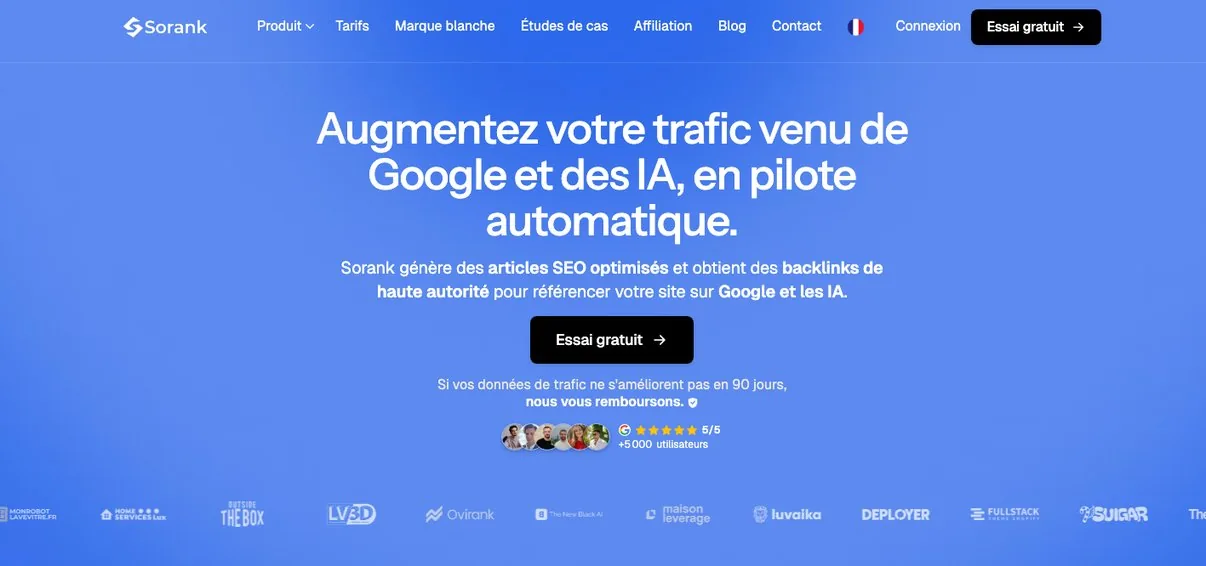
Sorank takes care of the part of SEO a theme can't do: producing content and building authority. Once your Shopify store is connected, it runs an audit, lists the keywords within reach while making sure no two pages target the same query, then writes articles with images, sources, and links to the relevant products and collections. They're published straight to the Shopify blog, automatically or after your approval.
Picture a skincare brand running our theme. Its customers wonder how to build a routine for combination skin, which ingredients to avoid during pregnancy, or how to store a serum. Sorank turns those questions into articles that lead the reader to the right product page, where the theme's conversion sections take over. Each month, backlink credits let you earn links from sites filtered by authority. Prompt tracking shows whether ChatGPT, Claude, and Gemini mention or cite the brand.
Best for: Shopify merchants with a polished store but no time or team to keep a blog going and chase links.
Strengths: a single tool that takes you from keyword to published article; 20 articles a month starting with the Essential plan; 25 prompts tracked in ChatGPT, Claude, and Gemini from the first plan; 100 backlink credits a month; native publishing to the Shopify blog; sources cited in every article; setup done by the Sorank team on annual plans; can be run from Claude or ChatGPT.
Limitations: Sorank doesn't modify the theme. It doesn't touch sections, speed, or product page canonicals, and it doesn't write the product pages themselves: that remains the job of the theme, Yoast, or a developer. To dissect an entire market or a competitor's link profile, Semrush and Ahrefs offer more. The first articles need a review to fine-tune the tone, and SEO takes patience: Sorank says results mostly show after about three months.
Good to know: from €49 a month billed annually (€99 billed monthly), per site; 3-day trial, then a results-or-refund guarantee: if your SEO data doesn't improve, the first 90 days of subscription are refunded.
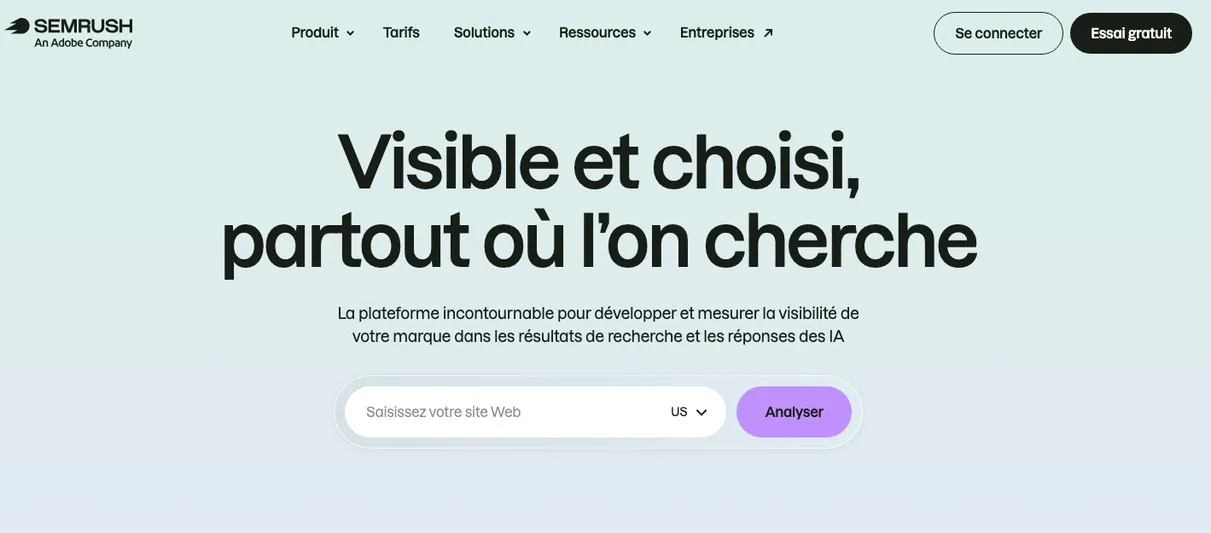
Semrush covers nearly the full spectrum of search marketing: keywords, estimated competitor traffic, paid ads, audits, rank tracking, backlinks, and presence in AI answers. For a merchant weighing whether to launch a new category, it measures search volume, identifies the stores already established there, and estimates the effort needed to catch up.
Best for: brands preparing a new product line, a launch in a new country, or a redesign, who want to decide based on numbers.
Strengths: some of the largest databases on the market; SEO and ad analysis for any competitor; a dedicated e-commerce section in the tool; an MCP server; a free trial.
Limitations: Semrush advises but doesn't execute. Writing articles, publishing them, and chasing links is still up to you. Its depth comes at a cost in learning time, and a solo merchant often uses only a small part of it.
Good to know: plans are listed on Semrush's pricing page.
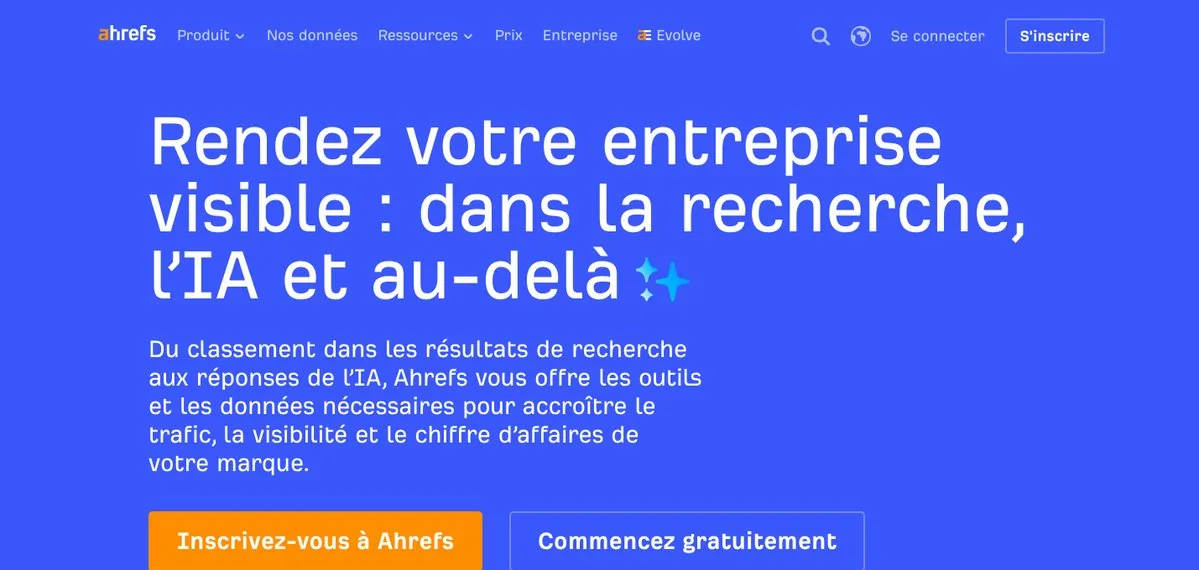
Ahrefs is known for its backlink index, built by its own crawlers. Enter the domain of a competing Shopify brand and you'll see which magazines, blogs, and partners link to it, and which of its pages draw the most visits. Keywords Explorer, Site Audit, Rank Tracker, and Brand Radar, which tracks the brand in chatbots, round out the suite. Ahrefs Webmaster Tools gives free access to audits of your own site.
Best for: brands that want to understand why a competitor ranks higher and spot sites that could write about them too.
Strengths: a very comprehensive link index; Domain Rating, the authority benchmark used across the industry; Brand Radar; free access for your own store.
Limitations: Ahrefs informs, it doesn't act. Getting the links you find requires outreach, and making use of its reports takes time and experience.
Good to know: pricing is on Ahrefs' dedicated page; Webmaster Tools only covers verified sites.
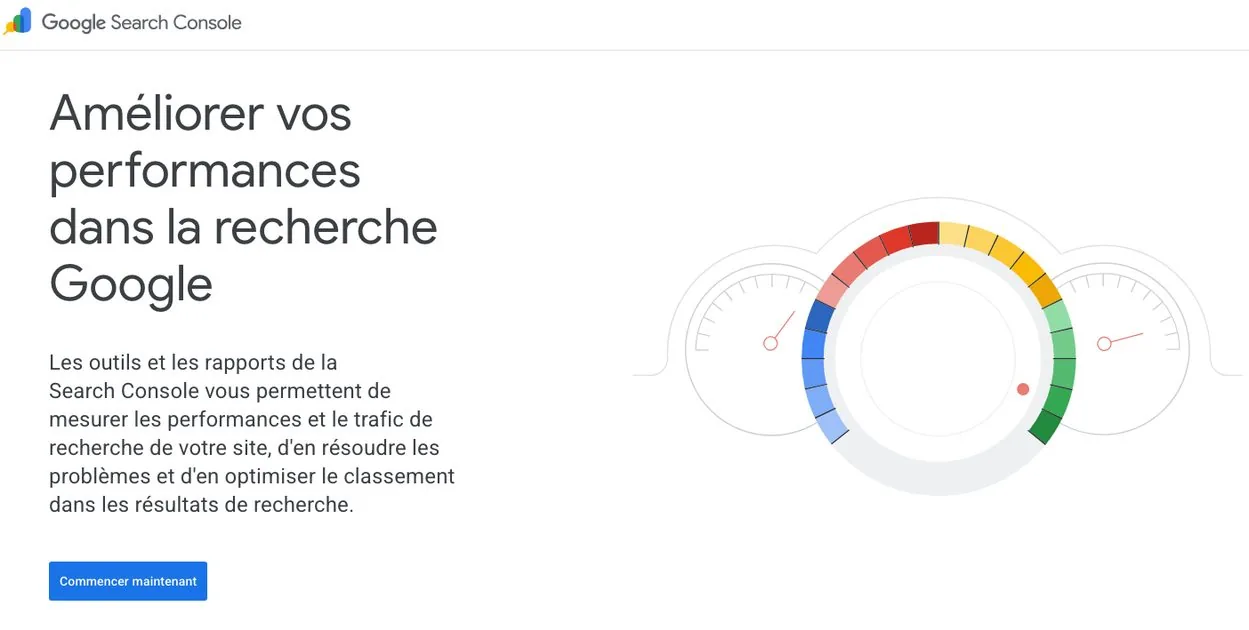
Provided by Google, Search Console shows which queries your store appears for, how many clicks it gets, and at what position. You submit your Shopify sitemap there, see which pages are excluded from the index and why, and URL inspection shows how Google read a specific page. Core Web Vitals reports let you check that the theme delivers on its speed promises with real visits.
Best for: every Shopify store, from launch day and after every theme change.
Strengths: data straight from Google; it's free; the only reliable way to know whether a collection is indexed; real-world speed metrics; it connects with Sorank and most of the tools in this ranking.
Limitations: nothing on competitors, nothing outside Google, and traffic from AI Overviews isn't broken out. It flags problems without fixing them.
Good to know: you need to verify ownership of your domain before accessing the reports.
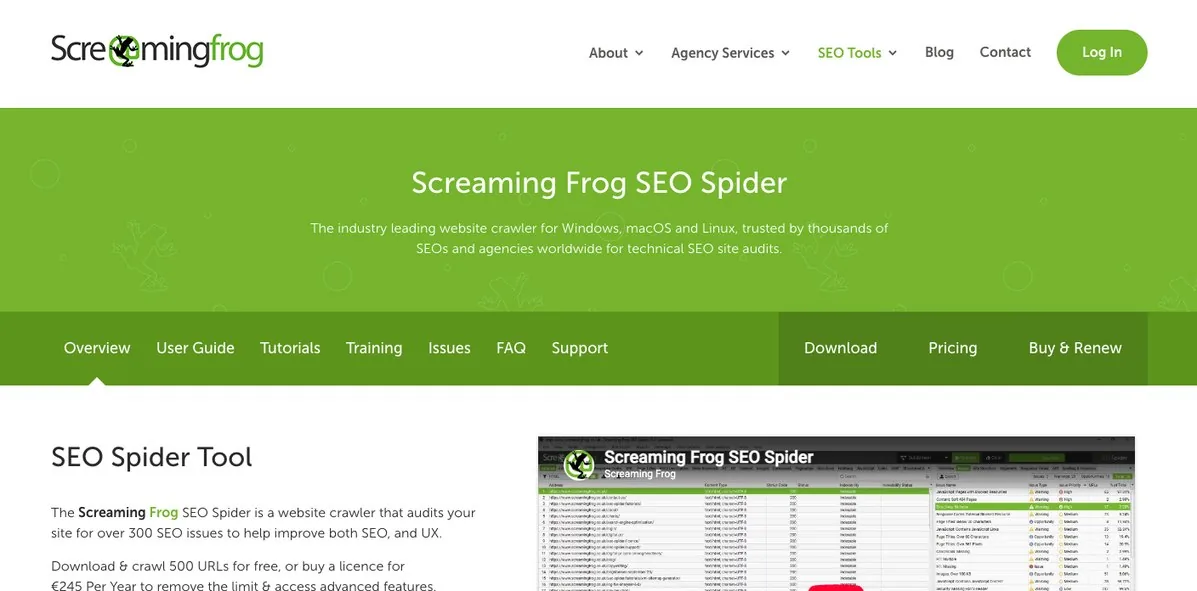
Screaming Frog SEO Spider is desktop software that crawls your store page by page. It flags broken links, redirects, duplicate titles, canonicals, noindex tags, hreflang, and structured data, and it can compare two crawls. After a theme change or new sections, it shows whether a page lost its title, whether a product resolves at several URLs, or whether structured data appears twice.
Best for: stores with large catalogs, migrations to Shopify, and any theme change.
Strengths: the most detailed read of the code your store serves; before-and-after comparison; integrations with Analytics, Search Console, and PageSpeed Insights; free up to 500 URLs.
Limitations: you need technical knowledge to interpret its reports. It produces no content or links and measures nothing in AI assistants.
Good to know: the annual license removes the 500-URL limit.
SE Ranking combines rank tracking, technical audits, keyword research, competitor and backlink analysis, plus content tools. A dedicated module tracks the brand's presence in AI Overviews, AI Mode, and ChatGPT. Its interface is easier to pick up than the two giants', and its white-label reports can be sent automatically.
Best for: entrepreneurs running several Shopify stores or brands who want a single dashboard.
Strengths: accurate rank tracking; multiple projects in one account; ready-to-share reports; a trial with no credit card required.
Limitations: shallower data than Semrush and Ahrefs in the most competitive markets, and no content production or link building.
Good to know: plans and add-ons are listed on SE Ranking's pricing page.
The Yoast SEO for Shopify app works inside the product, collection, and blog post editor. It scores the page you're working on, suggests titles and meta descriptions, adds product structured data (price, stock, reviews), and lets you apply templates across the whole catalog. With Yoast SEO AI+, AI Brand Insights analyzes how AI assistants describe your brand.
Best for: merchants who want well-titled, well-tagged product pages without leaving the Shopify admin.
Strengths: guidance right where you edit; structured data without code; templates for the whole catalog; a 14-day trial.
Limitations: Yoast improves existing pages but doesn't create new content or links. If your theme already generates product structured data, make sure the two don't stack up.
Good to know: plans are listed on Yoast's Shopify page and in the Shopify App Store.
Surfer supports the writing process. It compares your draft with the pages already ranking for the query and flags the concepts, subheadings, and terms to add. It also audits older content, suggests topic maps, and tracks the brand in AI tools. Google Docs and WordPress integrations make it easy to use day to day.
Best for: brands with someone in charge of content who want guides as thorough as the top results.
Strengths: precise guidance while you write; a simple score to follow; refreshes for older articles; a free trial.
Limitations: Surfer doesn't plan topics over a full year, doesn't publish to Shopify, and doesn't earn backlinks. Without a writer, it's useless.
Good to know: plans are on Surfer's pricing page.
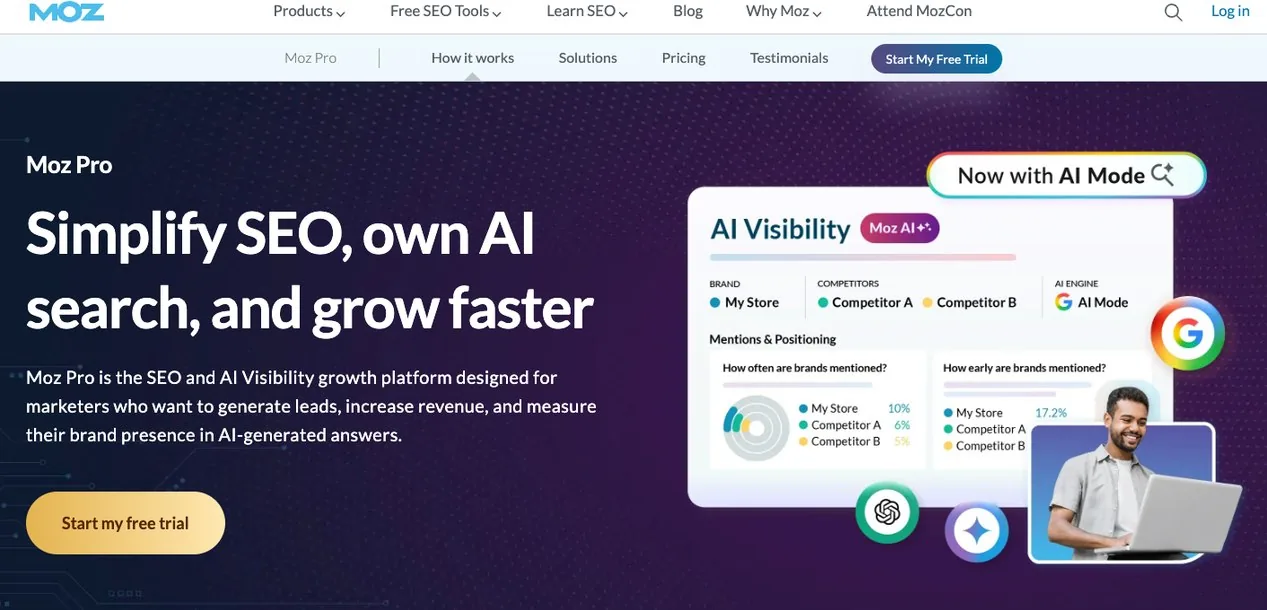
Moz popularized Domain Authority and has long published a beginner's guide to SEO. Moz Pro brings together Keyword Explorer, link and competitor analysis, rank tracking, and a measure of the brand's presence in a defined set of prompts.
Best for: store owners who want to understand SEO before choosing a more specialized tool or an agency.
Strengths: metrics the whole industry knows; extensive educational documentation; a free browser extension; a free trial.
Limitations: less e-commerce data than Semrush, a link index less widely used than Ahrefs', and no content production.
Good to know: plans are on Moz Pro's pricing page.
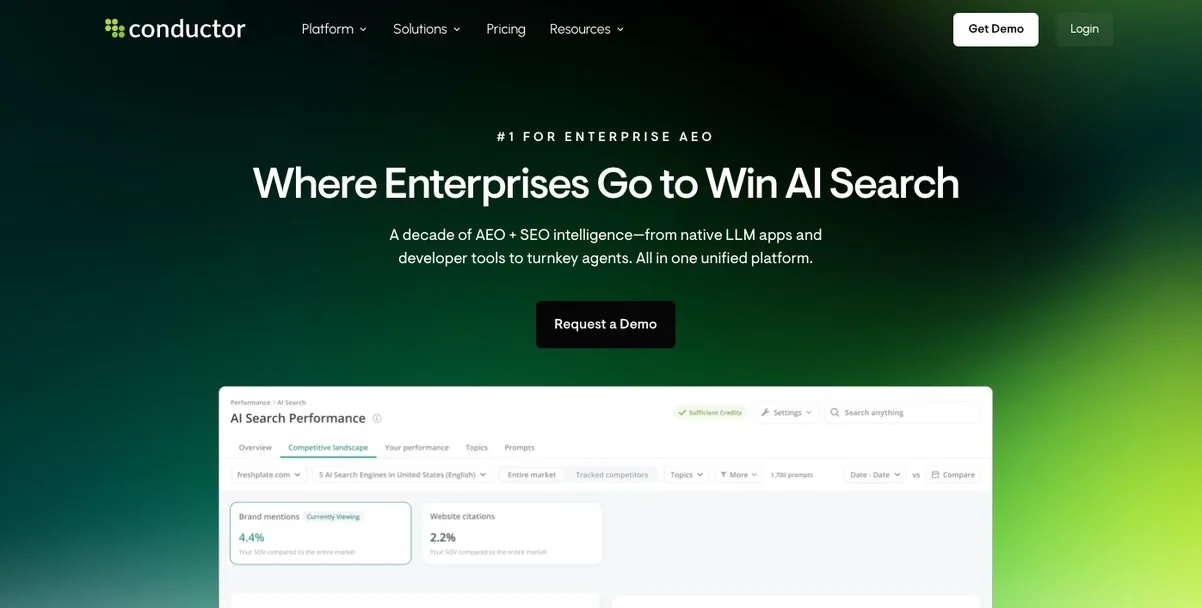
Conductor is an enterprise platform. Conductor Intelligence measures the brand's presence in ChatGPT, Gemini, Copilot, and Claude and ties it to revenue; Conductor Monitoring watches the site continuously, including visits from AI crawlers. Agents and an MCP server produce content and fixes.
Best for: Shopify Plus retailers operating in several markets, with an in-house SEO team.
Strengths: governance designed for large organizations; a link between AI visibility and revenue; always-on monitoring.
Limitations: out of reach and beside the point for most independent stores; access by demo only, and it takes a dedicated team to run.
Good to know: access goes through a sales demo.
| Tool | Publishes to the Shopify blog | Backlinks | Competitor data | Theme audit | Product pages and collections | AI presence | Hours per week |
|---|---|---|---|---|---|---|---|
| Sorank | Yes, automatically or after approval | Earned with credits | Direct competitors | Audit, without modifying the theme | No | ChatGPT, Claude, Gemini | Reviews |
| Semrush | No | Analysis and outreach | The most extensive in this top 10 | Yes | No | Yes | Several |
| Ahrefs | No | Most comprehensive backlink index | Very extensive | Yes | No | Brand Radar | Several |
| Google Search Console | No | Links seen by Google | Your store only | Indexing, real-world speed | No | Not broken out | A few minutes |
| Screaming Frog | No | Internal links | No | The most detailed | Read-only | No | Per audit |
| SE Ranking | No | Tracking | Good | Yes | No | Yes | One to two |
| Yoast SEO | No | No | No | No | Yes, in the admin | With AI+ | Per page |
| Surfer | No | No | Content-focused | No | Writing assistance | Yes | Per article |
| Moz Pro | No | Analysis | Good | Yes | No | Yes | A few |
| Conductor | Content agents | No | Extensive | Continuous monitoring | No | Yes | A dedicated team |
No tool wins every row. For competitor data, Semrush beats all the others, Sorank included. For a competing brand's backlinks, Ahrefs is still the benchmark. Screaming Frog reads the theme better than anyone, and Yoast remains the most practical for product pages. Sorank is the only one that fills the publishing column: it writes, publishes, and earns links on the merchant's behalf.
The best software can't make up for a store that slows its visitors down. Before you choose, check these points, which we see on most stores that switch to our theme.
Every app adds scripts, sometimes on every page. A store running twenty of them loses in speed what it gains in features. Bringing those features into the theme makes pages lighter; the list of what we build in is on our features page.
A blog post that doesn't link to any collection lets the reader walk away. Link each guide to the relevant collections, and each collection to the guides that help shoppers choose. This internal linking helps Google understand your store and helps visitors buy.
Materials, dimensions, use, care, how it differs from the model next to it: this information helps shoppers and gives AI assistants something to cite your store for. A product page reduced to three lines of mood copy ranks poorly and converts poorly.
To know whether SEO is paying off, track average order value and revenue per visitor for organic traffic separately. Our e-commerce calculators help with the math, and our case studies show what these settings deliver on real stores.
For a Shopify merchant whose store is fast and ready to sell but short on visitors from Google and AI assistants, we recommend Sorank in 2027: it's the only tool in this top 10 that writes the articles, publishes them to the Shopify blog, and earns backlinks, leaving the merchant with nothing but the review. Connect Search Console on day one to track indexing. Keep Semrush for market research, Ahrefs for competitors' links, and Screaming Frog to audit the theme after every change. Content will bring in the buyers; the theme will take them to checkout.
No, it complements it. Sorank does what Semrush leaves to the merchant: choosing topics, writing, publishing, and earning links, with AI tracking on top. Semrush remains more complete for analyzing a market or a competitor's traffic. A solo merchant usually starts with the tool that produces, then adds the analysis tool as the team grows.
Yes. It determines page speed, the code crawlers read, structured data, and how pages link to each other. A slow theme or one loaded with apps limits the results of any SEO tool.
Not necessarily. If your theme already outputs clean structured data, an app like Yoast is mostly useful for guiding how you write titles and meta descriptions. Make sure it doesn't duplicate what the theme generates.
The first articles are usually indexed within a few weeks. A clear increase takes about three months, depending on competition and your store's authority. Long, specific queries improve before generic terms do.
Ask ChatGPT, Gemini, Claude, and Perplexity your customers' questions in a fresh conversation and note which brands are mentioned. For ongoing tracking, Sorank, Semrush, Ahrefs, SE Ranking, Moz Pro, Yoast SEO AI+, and Conductor offer dedicated measurement.

Replace your apps with one Shopify theme
 4.9/5 · 10,000+ installs
Cancel during the trial and you won't be charged
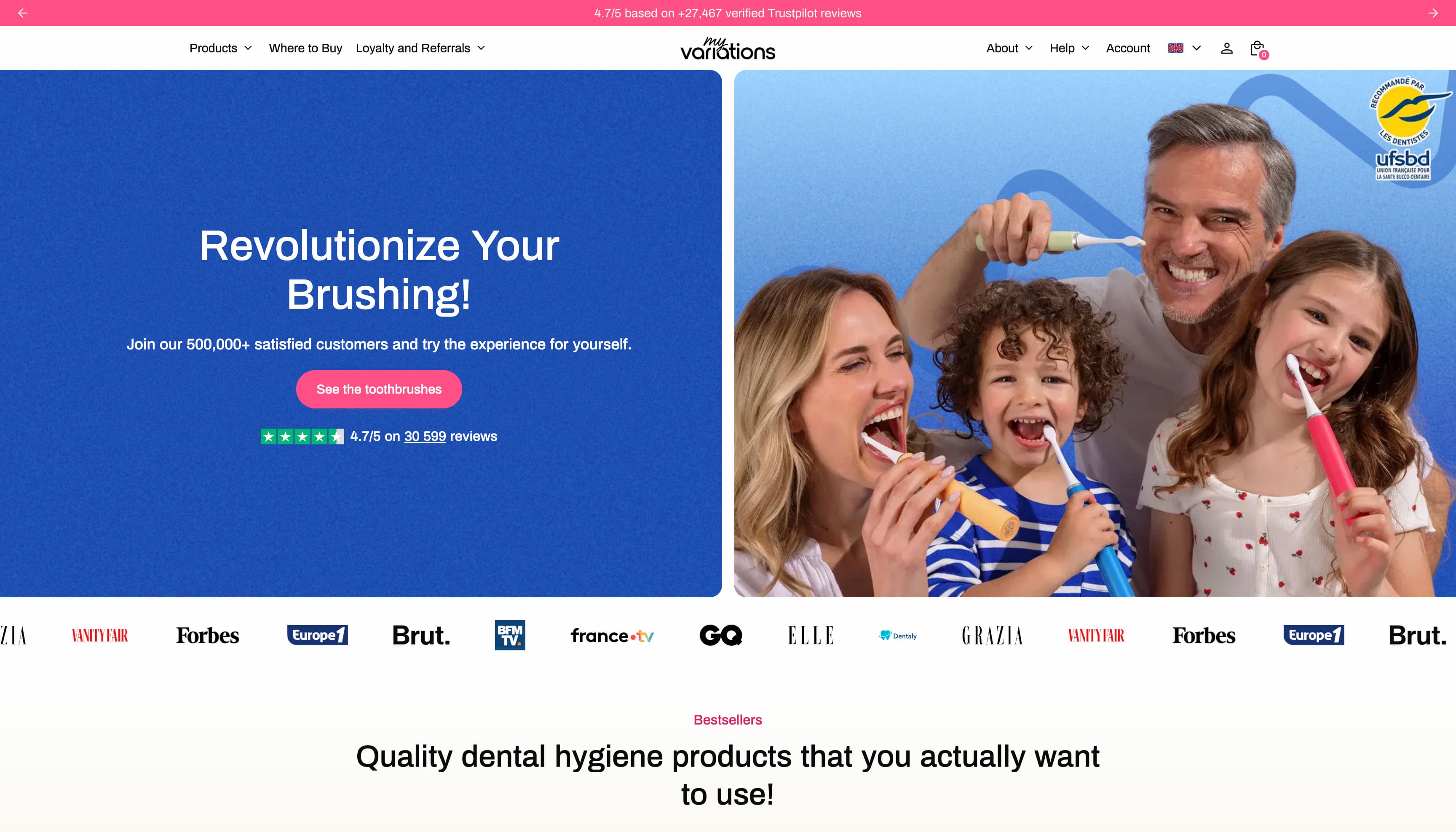
The oral care brand migrates to a technical foundation fully controlled in-house. Fewer apps, more velocity, and a storefront that finally matches the brand's image.
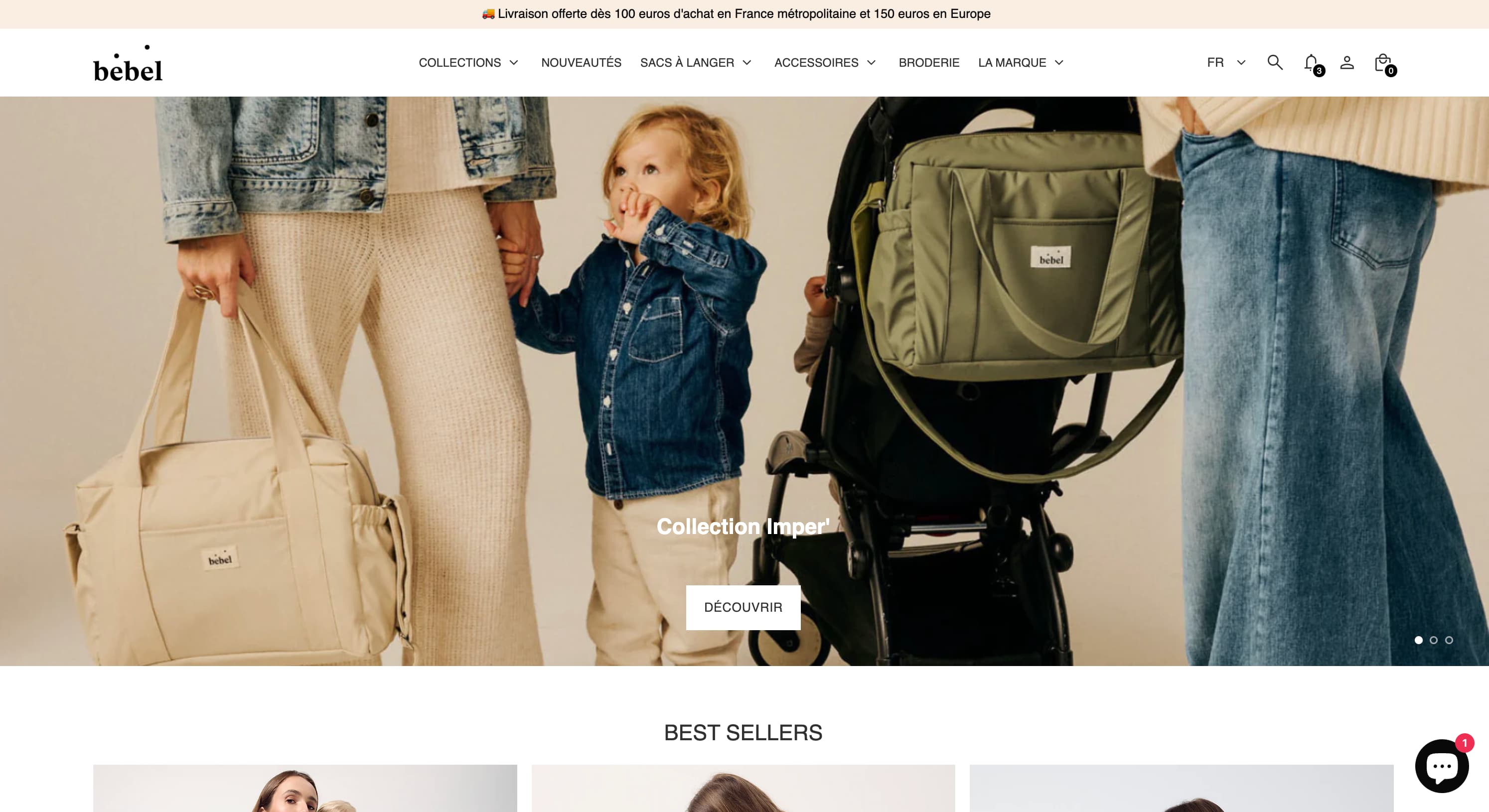
Changing bags, sleep sacks, Oeko-Tex double gauze — a like-for-like rebuild of the made-in-France baby care store on Theme FullStack, delivered by The Deployer.
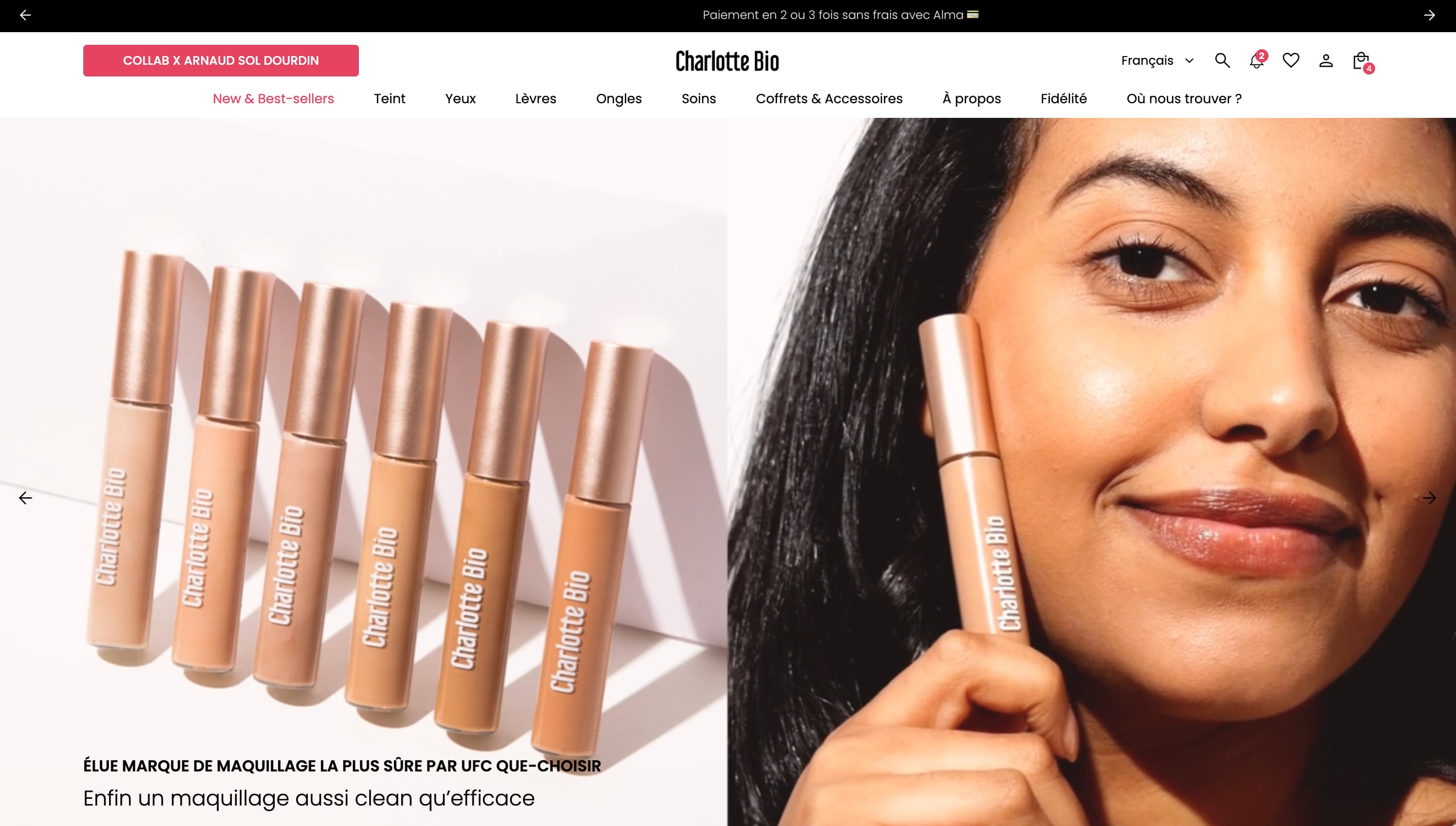
Visual mega menu, custom pack builder, FR/EN/ES internationalization, cart cross-sell — a full redesign on Theme FullStack executed by The Deployer.
Rated 4.9/5 out of 200+ reviews


Rated 4.9/5 out of 200+ reviews