Last updated on October 26, 2026
Abandoned cart recovery: strategies, timing and real examples to win back up to 18% of lost e-commerce sales with automated emails that actually convert.
Summary: Abandoned cart recovery lets you win back about 18% of unfinished carts through automated emails sent at the right time, with personalized content and the right incentives.
Every day, 7 out of 10 visitors leave your online store without completing their order. According to the Baymard Institute, the average cart abandonment rate is 70.22%, an average calculated from 50 separate studies. For an online merchant, that's a massive amount of lost revenue, often far greater than the revenue actually collected.
Yet these visitors aren't lost. They showed purchase intent by adding products to their cart. Abandoned cart recovery is the most direct lever for turning that hesitation into conversions. You still need to know when, how and with what message to follow up. That's what we'll break down here.
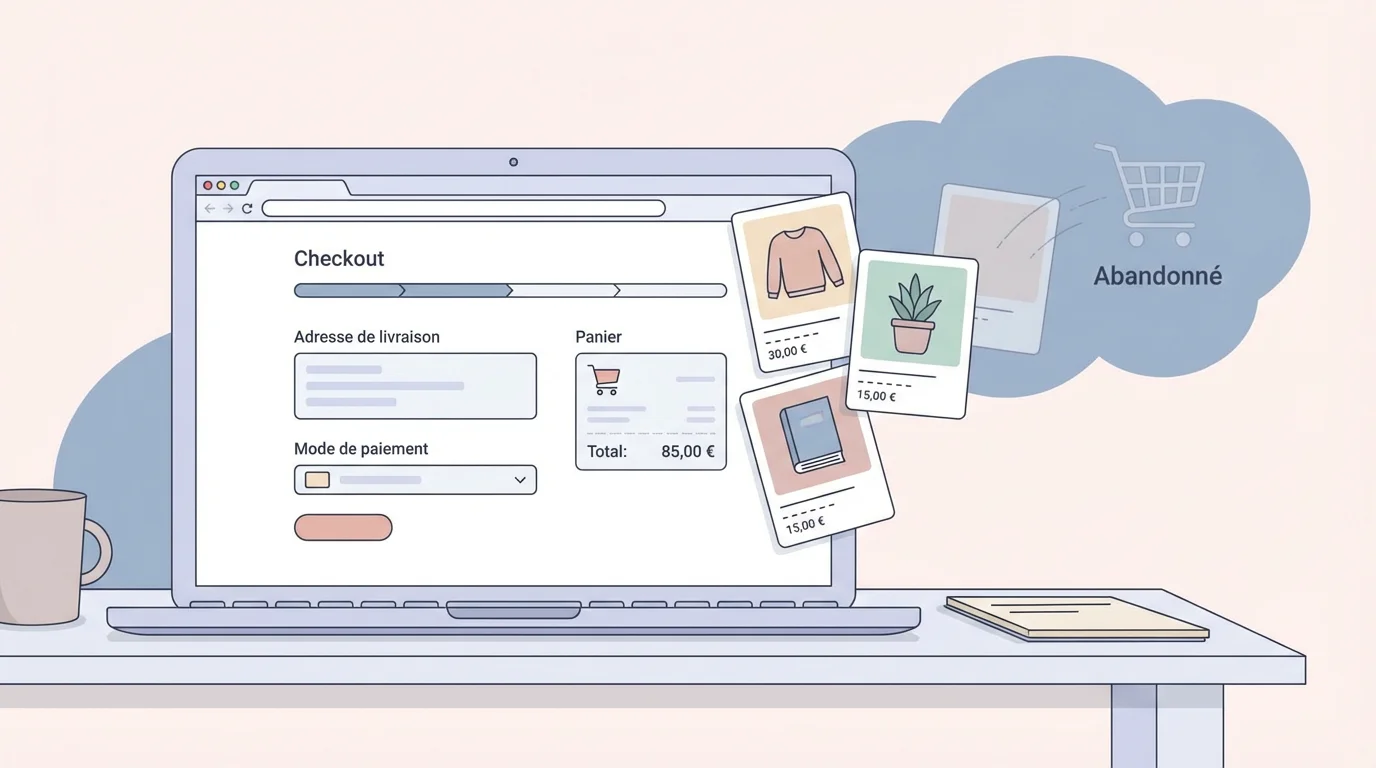
Before setting up a recovery strategy, it's essential to understand what drives your visitors away. 43% of US online shoppers say they abandoned a cart simply because they were “just browsing.” That segment is hard to win back. The remaining 57%, however, represent concrete obstacles you can act on.
48% of customers cite unexpected costs (shipping, taxes, add-ons) as the main reason for abandoning. Other obstacles come up regularly:
26% of shoppers leave the site because they're forced to create an account.
18% abandon because the checkout process is too long or too complicated.
Around 13% of shoppers give up because of site performance issues.
13% leave if their preferred payment method isn't offered.
In France, consumers are especially sensitive to pricing transparency. French shoppers react strongly to hidden costs and value clear display of prices and delivery times right on the product page. Understanding these obstacles lets you adapt not only your conversion funnel but also the content of your recovery emails.
The principle is simple: when an identified visitor (through a customer account or a collected email address) adds products to their cart and then leaves the site without buying, an automated recovery email is sent to them. This message usually contains a visual reminder of the abandoned items, a call-to-action button and, sometimes, a commercial incentive.
This kind of flow relies on marketing automation. Once it's set up, it runs continuously with no manual work. The e-commerce platform detects the abandonment, triggers the send at the scheduled time and personalizes the content based on each visitor's cart.
For this mechanism to work, there's one essential prerequisite: having the visitor's email address before they leave the site. That's why adding an email capture for cart recovery directly into your shopping journey is a top-priority investment.
When you send your recovery email directly affects how well it works. Reaching out too soon can feel intrusive; waiting too long gives the visitor time to forget you or buy elsewhere.
In 2024, the average open rate for abandoned cart emails reached 54.02%, up from 50.36% in 2023, according to data from SaleCycle. These outstanding numbers confirm that consumers are receptive to this kind of message, as long as you get the cadence right.
The most common recovery flow is made up of three emails:
First email (30 minutes to 1 hour after abandonment): a simple cart reminder, with no sales pressure.
Second email (24 hours later): a reassurance message, possibly with a touch of scarcity or urgency.
Third email (48 to 72 hours later): a stronger incentive, such as a promo code or free shipping.
A multi-wave sending strategy (1 hour, 24 hours and 72 hours after abandonment) can improve overall campaign performance by up to 30%. Beyond three emails, the risk of wearing out the recipient and triggering unsubscribes rises sharply.
A high-performing recovery email relies on five key components that work together to convince the recipient to come back and complete their purchase.
The subject line is the first filter. It should be clear, personalized (with the recipient's first name if possible) and spark curiosity without slipping into clickbait. Straightforward lines like “Your cart is waiting” or “You forgot something” work because they're honest.
Including images of the products left in the cart is a must. It rekindles the desire to buy and makes it easy to return to the saved cart in one click. A visible, explicit CTA (call to action) button, such as “Complete my order,” should go with this reminder.
Return policy, free shipping, secure payment, customer reviews: these elements clear up the doubts that may have caused the abandonment. The Baymard Institute estimates that a large e-commerce site can improve its conversion rate by 35.26% through better checkout design, according to data published by the Baymard Institute.
More than half of all emails are opened on mobile. Your recovery email design should be easy to read, quick to load and reflect your store's visual identity. An email that displays poorly on a smartphone is a missed opportunity.
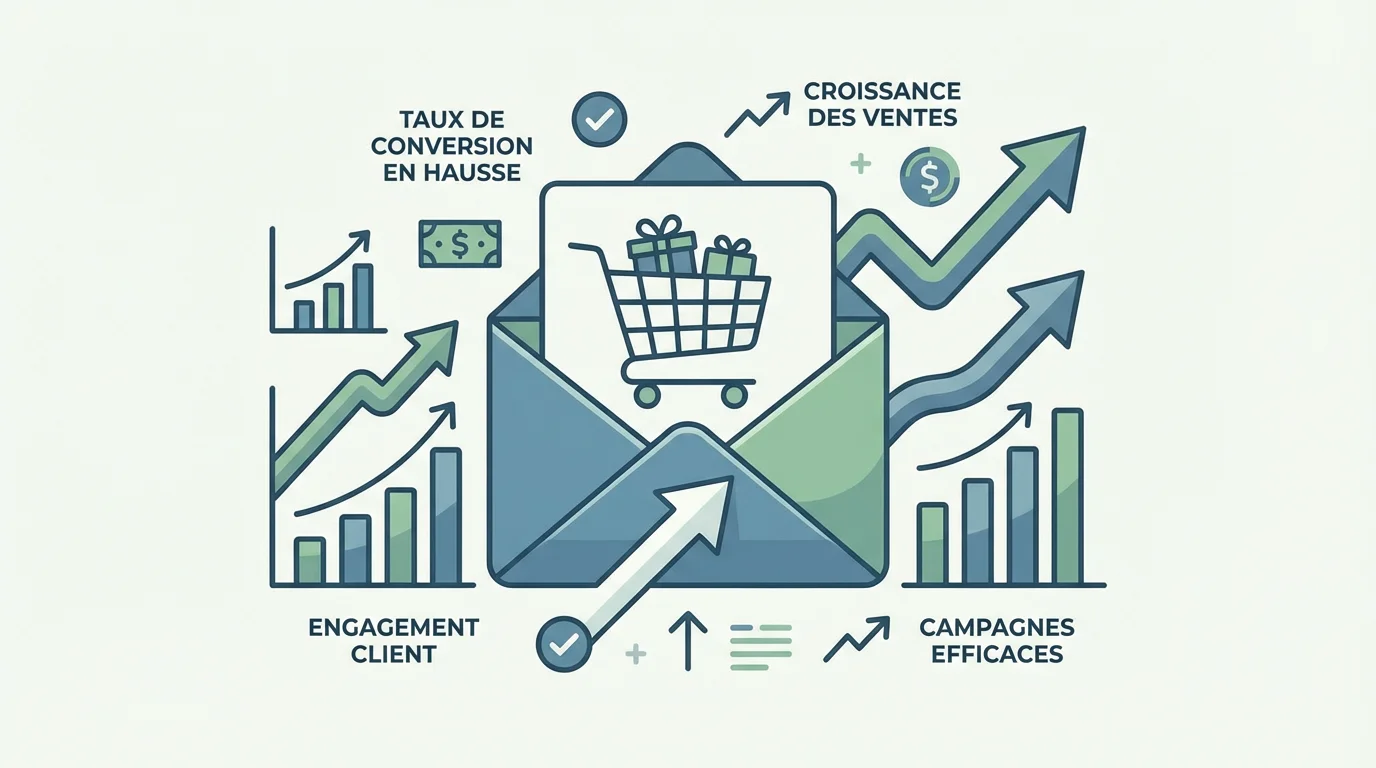
The numbers vary by industry and practice, but the trends are clear. According to Klaviyo's 2024 benchmark report, abandoned cart emails have an average open rate of 50.5%, compared with 39.74% for e-commerce emails overall. That means these emails are opened 27% more often than other campaigns.
Abandoned cart emails generate the highest revenue per recipient of all automated flows, with an average RPR of $3.65. When it comes to conversion, studies agree. According to a Salesforce study, recovery emails convert 17.6% of abandoned carts.
These results confirm that email recovery remains one of the most profitable levers in e-commerce marketing, with a modest upfront investment thanks to automation.
Beyond the classic reminder email, several techniques can significantly increase your cart recovery rate.
Mentioning limited stock or a cart reservation window creates a sense of FOMO (fear of missing out) that speeds up the decision. This technique works especially well in fashion, beauty and luxury, where abandonment rates are among the highest. Dynamic Yield data shows that the beauty and personal care sector has an abandonment rate of 83.29%, according to data published on Statista.
Offering a discount in the very first email is a common mistake. It trains visitors to abandon their cart to get a promo code. Save your commercial incentives for the second or third email. A modest discount code (5 to 10%) or free shipping above a threshold is often enough. To add this mechanism to your store easily, our native promo code field simplifies the experience for customers.
If the visitor changed their mind about a product, suggesting relevant alternatives in the recovery email can rekindle their interest. Personalized recommendations based on browsing history make the message more relevant and increase click-through rate.
Email is still the main channel, but SMS and push notifications are becoming more effective. A short text message sent 1 to 2 hours after abandonment can complement an email sequence and reach contacts who are less responsive to email.
The best recovery email is the one you never need to send. Acting upstream, directly on your site, reduces the number of abandoned carts and improves the entire customer journey.
Baymard Institute research shows that fixing checkout usability issues can increase conversion rates by up to 35.26%. The institute estimates that $260 billion in recoverable sales are lost every year in the United States and Europe due to a poor checkout experience.
Among the most effective preventive actions:
Show shipping costs right on the product page to avoid surprises at checkout. Our free shipping gauge shows in real time how much is left to spend to qualify for free shipping.
Simplify the checkout flow by cutting down the number of form fields and offering guest checkout.
Offer an accessible, smooth cart: a sliding cart drawer on Shopify lets visitors view their cart without leaving the product page, reducing friction.
Use an exit-intent popup when the visitor is about to leave the site, to offer one last incentive before they abandon.
To measure the impact of these optimizations, you can calculate your checkout abandonment rate and track how it evolves over time.
Regulatory compliance often comes up when it comes to following up with visitors who didn't complete a purchase. The good news: abandoned cart recovery is compatible with the GDPR, as long as you follow certain rules.
Sending a recovery email can be justified by the merchant's legitimate interest, as part of a pre-contractual relationship with the visitor. In practice, this means you should:
Mention the recovery practice in your privacy policy.
Include a clear unsubscribe link in every recovery email.
Inform the visitor, when they add an item to their cart or enter their email, that they may receive this type of communication.
Transparency is key. An informed, respected visitor will be far more receptive to your follow-up than a shopper who feels tracked.
With cart abandonment rates above 70% across all industries, ignoring abandoned cart recovery means letting most of your potential revenue evaporate. The data confirms it: a well-built recovery flow, sent at the right time, with personalized content and reassurance elements, can win back nearly one in five abandoned carts.
The key is to combine prevention (an optimized, transparent and smooth shopping journey) and recovery (an automated, targeted email sequence). Every improvement, however small, translates directly into extra revenue. With a theme designed to limit friction at every step of the shopping journey and packed with 100+ native features, you have a solid foundation to reduce abandonment upstream.
To go further, discover how our comprehensive approach to conversion rate optimization on Shopify can transform your performance.
The recommended flow includes three emails: the first within an hour of abandonment, the second after 24 hours, the third between 48 and 72 hours. Beyond that, the risk of over-messaging outweighs the expected benefit.
Studies put the average conversion rate between 10% and 18% of carts followed up on. The result depends on timing, content quality and how relevant the incentive is. With a Shopify theme natively optimized for conversion, like ours, you maximize your chances by reducing friction from the start.
Yes, as long as you justify sending it on the basis of legitimate interest and clearly inform the visitor. Every email must include an unsubscribe link, and your privacy policy must mention this practice.
Rated 4.9/5 out of 200+ reviews






